Deal or No Deal: How to Tackle Tween Growing Pains
Navigating the tween years with wisdom and humor—boundaries, honest conversations, and preparing yourself for the changes that come at eleven.
No one told me that kids turn into mutant ninja turtles when they turn eleven.
Suddenly they’re thinking on frequencies that make my mind boggle. They’re saying things that make my blood boil. They’re asking endless questions. And just like that, the peaceful ten-year-olds you knew seem to have “evolved.”
As parents, there’s so much we need to do to prepare them — and ourselves — for the tween years.
The Great WhatsApp Debate
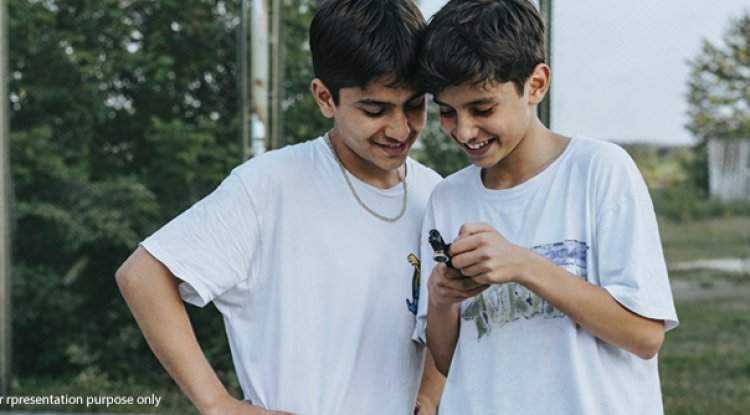
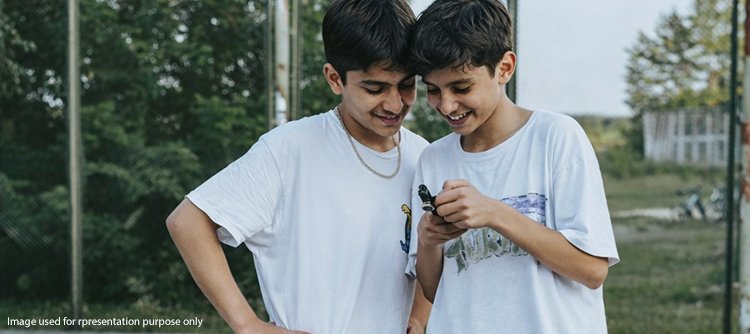
The other day, my tween-aged twin boys spent an entire hour trying to convince me that they had to join a WhatsApp group started by one of their school friends.
When I gently pointed out that they would first need a mobile phone, they had a quick two-minute discussion and concluded that yes — they needed mobile phones too. One each.
Being the thoughtful children that they are, they reasoned that the phones didn’t need to be expensive… but a camera would definitely be helpful.
Naturally, the evening did not end well.
While I tried (in vain) to explain that they would have plenty of time for WhatsApp and cameras when they were older, they replied with dramatic finality:
“This is as adult as we’re ever going to get.”
They had just turned eleven.
“Being a parent means drawing a line — and sometimes re-drawing it — but never erasing it completely.”
My Mommy Is Not Cool
If it were up to our kids, my husband and I would hold honorary PhDs in uncoolness.
We are constantly reminded of how “lenient” and “liberal” other parents are. We are frequently asked, “What have you done with our real parents?” — as though we are guilty of a well-planned kidnapping.
But truthfully, we don’t mind.
It was never our goal to become our children’s best friends. We already have friends — the grown-up kind. God entrusted these little people to us so we could be their parents.
And being a parent means drawing a line.
Sometimes you may rub off the first version and redraw a better one. But the line must remain.
That line may:
-
Upset them
-
Activate “super sulk” mode
-
Tug at your heartstrings
-
Make you question whether saying “no” was worth it
They may think we are the worst parents on the planet for not allowing a certain TV show or book that “everyone else is watching.” But hopefully, those boundaries teach them right from wrong.
If being uncool helps shape character, that’s a trade-off I’m willing to make.
The real challenge? Enforcing boundaries while keeping communication open — especially when your advice is no longer treated like manna from heaven.
There’s a Monster Under My Bed… or Is There?
Remember when cuddles could fix everything? When playing superhero solved T-Rex-sized problems? When you always knew what to say?
Those days are gone.
Tweens aren’t afraid of imaginary monsters. Instead, they ask real-life questions — the kind that leave you unsure, not because you lack the answer, but because you’re unsure how much to say… or whether you should say it at all.
Should you discuss this topic?
Should you deflect it?
Should you pretend you’re on the phone?
One thing I’ve learned: ignoring the question doesn’t make it disappear. It simply pushes them to seek answers elsewhere — from friends, media, magazines, or other unreliable sources.
We would rather have them ask us.
That doesn’t mean offering thesis-level explanations. It doesn’t mean lying. And it certainly doesn’t mean shutting them down.
In our family, we tailor information according to age.
When our six-year-old asked how babies were made, we told him that God blessed us and placed a baby in Mommy’s tummy. That satisfied him — at least for the time being.
But when my older boys asked why we buy sanitary napkins, they received a simple, clinical biology lesson.
Not the whole truth in graphic detail — but the truth in portions they could understand.
Because there is a huge difference between being truthful and being graphic.
“When we label a topic as taboo, we don’t kill curiosity — we multiply it.”
The “Oh-That’s-Gross” Stage
One of my twins was invited to participate in a group dance at school. Normally, he loves being on stage. But this time, he declined.
“Why?” I asked.
“What! I’ll have to hold hands with a girl! That’s gross!”
When did something so simple become gross?
It was a reminder: they’re growing up. Fast.
So how do we guide them toward healthy, respectful relationships with the opposite gender?
Here are a few practical steps:
-
Model respect at home. Monitor how we speak about the opposite gender.
-
Encourage healthy interaction. Don’t create unnecessary awkwardness or negativity.
-
Explain emotional differences. Help them understand that differences are not weaknesses.
-
Set boundaries early. Teach appropriate language, conduct, and manners.
-
Emphasize mutual respect. Every healthy relationship is built on it.
“Different is not wrong. Different can be good — especially when your values stand higher than the world’s.”
Preparing Ourselves for the Tween Years
Parenting tweens requires intentionality.
-
Listen carefully.
-
Watch for changes.
-
Anticipate fears and questions.
-
Initiate well-timed conversations.
Once, while driving past a billboard with a questionable slogan, one of our boys asked what it meant. Instead of dodging it, we used it as an opportunity to explain the importance of setting high personal standards — in our thoughts, words, behavior, and relationships.
It’s okay if our standards look different from the world’s.
In fact, in many cases, different is good.
When we treat topics as forbidden, curiosity skyrockets. Smart parenting means addressing every question, scenario, or concern patiently, lovingly, and wisely.
Because while eleven-year-olds may evolve overnight…
They still need parents who stay steady.
What's Your Reaction?