Parenting with a Twist: Part 1 – Instructor vs. Commander
Discover a positive parenting approach that focuses on training, not commanding. Learn how to guide children with dignity, patience, and developmental understanding.
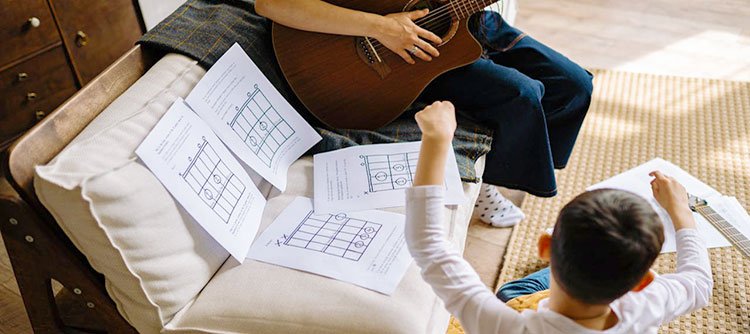
Children are not going to make the choices we want them to make until and unless we keep showing them how to! The real question is—how do we guide them in a way that fully upholds their dignity? It begins with a paradigm shift in how we view our role as parents and how we understand discipline.
From Newborn Wonder to Toddler Tantrums
Do you remember the first time you laid eyes on your newborn baby? Those magical moments are unforgettable. I remember gazing at each of my four children—feeling immense joy, relief that the delivery was over, and the stirring of deep love for this tiny person entrusted to me.
But that sweet memory can feel very distant when that bundle of joy turns two and throws their first tantrum—like a hurricane has torn through the house! Or when your four-year-old loudly declares why they disagree with your every request. In those moments, all you want is peace—just give back the toy, stop bothering the sibling, and let me finish my work! How perfect would that be?
Our Default Parenting Mode
This is often when our insecurities kick in and our autopilot turns on. We start reacting the very same way our parents did—saying and doing things we once promised ourselves we never would. Why does this happen? And how can we stay in control?
Though parenting is exhausting and draining, we must remember: our child is not yet a fully formed adult. They are individuals growing toward maturity. They are not going to make the right choices unless we show them how—patiently and consistently.
So how do we do that while still preserving their dignity?
Instructor vs. Commander
Children go through years of learning and practice before they become doctors, engineers, lawyers, or artists. In the same way, they need instruction and training to develop into emotionally, relationally, mentally, and physically healthy adults.
Yet our default approach often resembles a military commander:
“Follow the rules or face the consequences!”
We demand obedience, often using fear-based tactics to enforce good behavior. After all, as the saying goes: “Spare the rod, spoil the child,” right?
But what if we reframe this entirely?
Rethinking Discipline
According to the Oxford Dictionary, discipline is:
“The practice of training people to obey rules or a code of behavior, using punishment to correct disobedience.”
Punishment, in turn, is defined as:
“The infliction of a penalty as retribution for an offense.”
That sounds harsh—especially when applied to our tiny humans who are just learning about life.
Every time my husband and I choose to spank our children, it breaks my heart a little. Yes, we are learning and trying to remove physical punishment from our methods entirely. But it makes me question:
Is the goal of parenting simply obedience?
Or is it to raise creative, independent, confident, responsible adults who can contribute positively to the world?
If it’s the latter, then we must train our children in a way that reaches their body, mind, and soul—keeping in mind that each child is unique.
Training for Life, Not Just Behavior
When we guide a toddler through a tantrum, we are helping them build emotional regulation skills for school and beyond. When we help siblings handle conflicts, we are laying the foundation for healthy relationships in their future workplaces and marriages.
Psychologist Erik Erikson taught that humans progress through eight psychosocial developmental stages. Successfully navigating each one is crucial for healthy maturity. Parenting that focuses on training—rather than commanding—helps children move through these stages, rather than getting stuck.
We Are Still Learning Too
My husband and I are far from perfect. We make mistakes every day, and we often pray that we won’t damage our children too much in the process! But parenting is a journey of continual adjustment—both in how we see our children and how we see ourselves.
If you are aware of your weaknesses, willing to admit your mistakes, and ready to apologize when necessary—you are already doing a wonderful job.
There are moments when all four of my children seem to have been overtaken by the “crazies,” and I completely lose my composure. After the chaos settles, I go back to them, acknowledge what I did wrong, and apologize. And one of the most beautiful things about children is their immediate willingness to forgive and love us anyway.
A Home for Growth
What a gift it is to provide our children with a home where they can grow into who they are uniquely created to be—without the pressure of fitting into society-prescribed roles.
What's Your Reaction?