Celebrating Our Differences – Combating Intolerance by Dignifying Others
A thoughtful reflection on dignity, diversity, and seeing every individual as fully human—at home, in society, and across India’s rich social landscape.
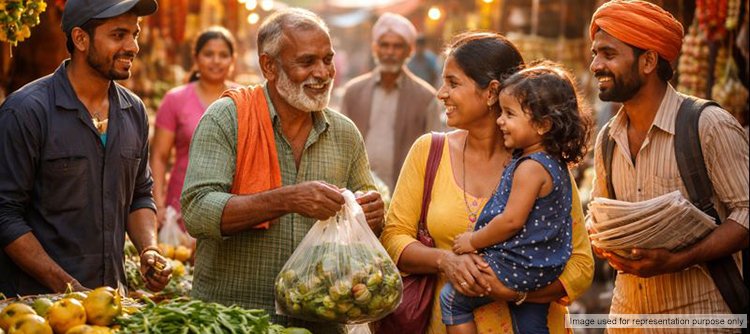
What would our country look like if we looked at the sabzi wala, kabadi wala, mechanic, and others—and saw not a service provider, but a human being with perspectives, emotions, opinions, weaknesses, and strengths? What if we viewed them as valuable members of humanity, rather than measuring their worth by what they can do for us and how well they do it?
Lessons from Parenting Four Unique Individuals
My husband and I have four children—all under five and a half years old. It has been amazing and delightful to watch each of them grow into their own unique personalities. Our youngest is nine months old, and even now, her personality is beginning to shine through—her smiles, her eagerness to make eye contact, and her curious explorations as she crawls around our apartment.
Each child has shown us how wonderfully different they are and how discipline, attention, and one-on-one time must be approached in unique ways. With every child, we’ve had to tweak our parenting approach.
-
Our eldest learns best when we add imagination, fun, and creativity to what we are teaching her.
-
Our second has a logical mind, loves building things, and once he learns something, he rarely forgets it.
-
Our third, at 20 months, thrives on physical touch and needs it to remain emotionally upbeat.
-
Our youngest loves to stay on the move so she can be close to all the action.
When I watch them play together, I don’t see “four kids.” I see four individuals—with opinions, preferences, quirks, weaknesses, and strengths. Each of them means the world to me. None is more or less valuable than the other.
Teaching Children Dignity Through Everyday Practices
We use two simple, practical methods to teach our children how to expect dignity from others—and how to offer dignity in return.
1. “Good child, bad choice”
Whenever we address discipline, we make it clear that our children are not bad, even if their choices were. We consistently remind them that they are good and deeply loved. This reassures them that they are valued and that our love for them is not dependent on their behavior.
2. “Use your words”
To reinforce that each child’s voice matters, we encourage them to “use their words.” When conflicts arise between our older children, we ask them to explain:
-
What they are unhappy about
-
What they need from the other person
This practice helps them listen to one another and articulate their feelings—skills that lay the foundation for treating others with dignity.
Raising Whole Human Beings
These daily practices are rooted in a fundamental truth: our children are full human beings. If we see them merely as a “five-year-old” or a “three-year-old,” we limit our ability to prepare them for life. We must see who they are now while also anticipating who they will be at 15, 25, or 35. That is the person we are raising—not just the child they are today.
They already possess the essence of who they will become; they simply need guidance to get there. When parents keep the end goal in mind, dignifying children becomes second nature—and their ability to dignify others follows naturally.
Extending This Vision Beyond Our Homes
What if this is how we viewed everyone we encountered?
What would our country look like if we saw the sabzi wala, kabadi wala, mechanic, ayah, bus conductor, police officer, dhobi, and every other person we meet as individuals with perspectives, preferences, complex emotions, opinions, weaknesses, and strengths?
India is rich in diversity. The key to celebrating that diversity is learning to celebrate each individual.
Dignity and Diversity
This perspective is vital when we think about diversity—socially, politically, and religiously. Every individual on this planet holds equal worth. Just as my children are equal to me in their humanity, so too must we view others as equal to ourselves.
Regardless of socio-economic status, caste, religion, political stance, or skin color—we are all human beings of great value.
Practical Steps to Dignify Others
Recognize each individual as valuable
In everyday interactions—on the bus, in the market, at work, or at home—do something simple: make eye contact, smile, offer your seat, ask someone’s name, or engage in a brief conversation. Look beyond appearances and status to see the person before you.
Focus on the positive
Affirmation is far more powerful than critique. Words and actions that affirm build people up and foster peace. While correction has its place, affirmation should be the foundation. Take time to acknowledge what people are doing right—it encourages growth and change.
Practice active listening
When engaging with someone, resist the urge to give advice or redirect the conversation to yourself. Listen for meaning. Respond with empathy, acceptance, and sincerity. Paraphrasing what someone has shared helps them feel truly heard.
Respect individual identity
No matter our position in society, each person has the right to make choices that affect their life. Asking for someone’s opinion or preference—even when it differs from our own—demonstrates respect and dignity.
Choose to see the whole person
Train yourself to see people not only for who they are today, but also for who they are to their families, their communities, and who they may become. Dignifying others is reciprocal—it dignifies us in return.
A Call to Practice Dignity Daily
These are small but powerful steps we can take to dignify the “other,” thereby combating intolerance. India is a nation of many hues, and it is by honoring what is different in each of us that we truly come together.
What's Your Reaction?