Unravelled – Reconnect with who you are
A personal journey of overcoming childhood fears, social anxiety, and self-doubt through counselling and self-reflection. This heartfelt story reveals how small everyday moments hold the key to transformation, healing, and finding true friendship in therapy.
The answers, and the opportunities to transform your life, often lie waiting to be unwrapped in the small, everyday routines of our lives.
“I was abused as a child!”
“I saw my father beat my mother every day!”
“My mother died when I was a child!”
“I wished I didn’t have to tremble each time I heard my father’s footsteps echoing around the house.”
Ah, how I envied those who could capture a listener’s attention within seconds while describing their life story. My own story always seemed bland and fortunate when compared to such narratives. And fortunate it truly was. My parents are still married after 29 years. I never saw my father raise his hand against my mother. I was sent to a good school, and I cannot remember ever going without a meal.
It was perhaps this keen awareness of my privileged childhood that made me ashamed of dwelling on what I felt was missing. This, I now know, was a terrible mistake, and I will explain why by the end of this article.
“Stealing sweets felt less torturous than the internal trauma of having to ask for something to eat.”
I wished, for instance, that I did not tremble each time I heard my father’s footsteps echo through the house. It’s not that my father abused me or anything of that sort. And yet, I began blaming myself for my fear. This fear manifested in strange ways, like stealing sweets when I longed for something good to eat. It felt less torturous than the internal trauma of asking for food.
My fear of asking also showed itself in the endless pacing outside my father’s door whenever I needed money to buy school books. Stealing felt easier and less exhausting. Alongside this, I seemed to have more chores than most of my friends. These “chores” often required a full day’s work. My father embodied perfectionism, and every task was scrutinized down to the smallest detail. If it didn’t meet his standards, I simply had to redo it, until he was satisfied.
“Going out with friends was a traumatic experience because I was too scared to ask for money.”
As I grew older, I became increasingly socially awkward. I felt out of place among my friends, though I was too young to understand why. Going out with friends was traumatic, as I constantly had to invent excuses for why my parents wouldn’t allow me to join them. The truth was that I was too afraid to ask for money. I felt I could only ask once my chores were completed, which, more often than not, they never were.
In my early twenties, I was privileged to retain several childhood friendships. Despite my awkwardness, my friends still seemed to enjoy my company. Yet my childhood fears continued to haunt me, though they took on new forms. I was now working as a music teacher for children, but I constantly felt that my teaching was never good enough. As you can imagine, fee-collection day filled me with guilt instead of pride. I avoided people because I struggled in conversations, often freezing mid-sentence. Conversations with new people were filled with long, awkward silences. I rehearsed conversations in advance, writing them out repeatedly, yet nothing ever felt good enough.
“Fee-collection day was a day of guilt, not a celebration of hard work.”
As you may have begun to understand, I struggled with money management and self-esteem, leading to endless cycles of anxiety and worry. I felt like a complete misfit.
Eventually, I knew I needed help. My journey toward changing the way I thought began when I started seeing a counsellor. He described psychotherapy as a friendship. He even spoke of spiritual leaders who, despite deep prayer lives, struggled to overcome habits that plagued them personally.
“My childhood fears haunted me in adulthood, just in different forms.”
This resonated deeply with me. I could recall the frustration of praying repeatedly about the same issues, only to see them return and overwhelm me again. Coming from a Christian background, I had been taught that prayer was the answer to everything. While I would have denied it if asked, my understanding of prayer was often rather primitive, almost like communicating with a magician who waved a wand and fixed everything instantly.
What the counsellor said struck me hard. My inability to deal with crippling patterns of thought and behaviour had much to do with how little responsibility I had taken in my own process of transformation. Simply put, I was unrealistic.
“Counselling was not a detached pointing out of my flaws, but an acknowledgement of my pain.”
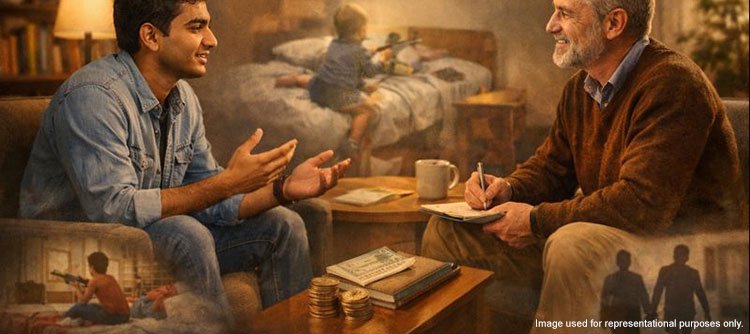
Thus began my journey. I remember a moment from my very first session. I was asked to describe a present-day situation that troubled me. At the time, I was teaching music to a child using a new, play-oriented syllabus. The student enjoyed it, the parents were pleased, and even my own conscience acknowledged that I was doing well. Yet, I dreaded every class, consumed by guilt that I was cheating the parents by allowing play to occupy half the lesson.
The counsellor then asked me to recall a memory from my childhood. I spoke about playing in my parents’ room at the age of six. I had walking sticks that doubled as imaginary machine guns. My parents’ bed served as a barricade from which I fought imaginary enemies. When I heard my father approaching, I hurriedly shoved the “guns” under the bed and pretended to be doing something more “useful.”
“I blamed myself for things that were not my fault.”
I still don’t know why that memory surfaced at that moment. But I will never forget how skilfully the counsellor connected the two experiences. He explained that I had grown up without fully understanding the value of play. As an adult, even though I longed to create a playful learning environment for my student, I struggled internally, believing I was wasting time and money.
You, as the reader, likely have your own reasons for feeling like a misfit at times. The thought I want you to sit with is this: do not be ashamed of acknowledging the areas where life felt unfair to you. Don’t fall into the trap of minimizing your pain because others have suffered more. Yes, there will always be someone who has endured greater hardship, but that does not mean your pain does not matter.
“The answers and opportunities for transformation lie waiting to be unwrapped in the small everyday routines of our lives.”
This was my greatest mistake. I allowed shame to silence me. The more I tried to hide it, the more misunderstood I became. I blamed myself for things that were not my fault. I was angry with my parents, yet so overwhelmed by unexpressed hurt that I never dealt with the root cause.
The issue was never money. It was the fear of asking, and the constant feeling of never being good enough. I never imagined that not asking for sweets, school books, or money to spend time with friends would lead to such deep anxiety and misunderstanding. Nor did I realise that endless chores would shape me into a perfectionist, driven not by excellence, but by fear of failure.
“Don’t be ashamed to acknowledge the areas where life has been unfair to you.”
I remain deeply grateful for the year or so during which I received counselling. Moments like the one I described, where the past brought clarity to the present, helped me realise that I did not need to blame myself for what was beyond my control. At the same time, I learned that I could take responsibility for healing those painful memories.
The answers and opportunities for transformation truly do lie hidden in the small, everyday routines of our lives, we only need to learn to see them.
And finally, beyond techniques and theories, my experience of counselling was far more than receiving solutions from a detached professional. It was not about being told what was wrong with me. It was about my pain being acknowledged, trust being built, and healing taking place in the presence of someone who genuinely cared.
It was, quite simply, a friendship.
What's Your Reaction?