The Cost of a Lie
An insightful reflection on macro and micro truths, propaganda, and logical fallacies, examining how lies divide societies, threaten democracy, and why individuals must remain vigilant, curious, and committed to truth.
Macro and micro are commonly used word prefixes. Both relate to size, but in opposite directions, macro refers to the very large, while micro refers to the very small.
For example, macroeconomics studies economic issues that affect large groups such as nations, whereas microeconomics focuses on smaller units like families and individual companies.
Truth at the Macro and Micro Level
When we speak about truth, can there be macro and micro versions of it?
To explore this, let us introduce two ideas that shape how we relate to and understand the people around us.
-
Micro truths are our personal experiences. They shape our relationships with people we encounter daily.
-
Macro truths are generalizations that influence how we perceive entire communities.
Macro truths guide many of our choices, where we live, which schools we send our children to, and how we view different social groups. When the macro truths we believe are wrong, whether because we were deliberately misled or because of faulty analysis, we end up making poor decisions.
Why Truth Matters
Truth is the most important value. Lies built Auschwitz, without lies about Jews, there could not have been the Holocaust; without lies about Blacks, there could not have been the slave trade. Lies are the root of evil more than any other sin.
People who believe lies do not know they are doing evil, that is why it is so terrible. You can enslave Blacks because they are considered ‘not really human’; you can murder a Jew or a Gypsy because they are seen as vermin, and so on. All genocides are based on lies. The world rests on truth.
Division and Manipulation
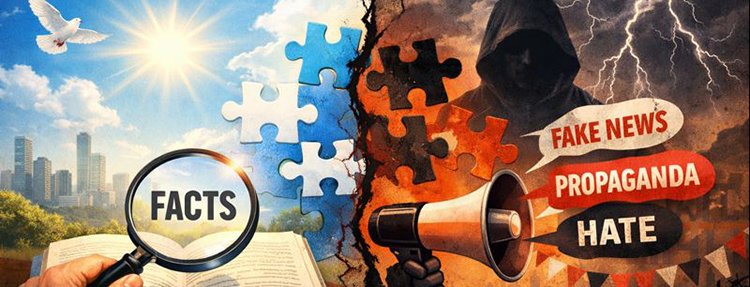
When people are sharply divided into tribes on the basis of caste, religion, language, or culture, they are easy to manipulate. Latent tribal instincts make groups susceptible to an “us versus them” narrative.
Even narratives filled with easily disproved propaganda and conspiracy theories are believed by a divided people if they appear to serve the group’s self-interest. Embellish a lie with half-truths and attractive catchphrases, repeat it often, and belief in it will withstand logical challenges.
In India, our natural diversity of language, religion, and traditions makes us easy targets for polarization and division. The British exploited this reality, and political parties in independent India continue to do so. As we approach the threshold of a general election in 2019, we will see increasing amounts of divisive propaganda.
The Danger of Non-Rational Propaganda
Aldous Huxley, in his 1958 essay Brave New World Revisited, warns about non-rational propaganda that serves nobody’s self-interest but is dictated by, and appeals to, passion.
Such propaganda avoids logical argument and seeks to influence its victims through the mere repetition of catchwords, the furious denunciation of foreign or domestic scapegoats, and the cunning association of the lowest passions with the highest ideals, so that atrocities come to be perpetrated in the name of God and as a matter of religious principle or patriotic duty.
Threats to Democracy
A strong democracy needs free and fair mass media, vocal social activists, and strong opposition political parties to give voice to issues that threaten the progress and security of the country. In the run-up to elections, we often see attacks on these pillars of democracy through televised debates and social media.
Many of these attacks take the form of ad hominem fallacies (Latin for “to the person”), illogical arguments that target the character, motives, or other attributes of the person raising an issue, rather than addressing the substance of the issue itself. Such fallacies are strategies used to dodge inconvenient truths.
Common Ad Hominem Fallacies
|
Our Responsibility as Individuals
As individuals, we are the building blocks of our democracy. All propaganda is targeted at us, don’t fall easy prey to lies and fallacies. Double-check information before you circulate it. It doesn’t matter whether it is pro or anti the cause you believe in. Just because you heard something or read it on WhatsApp doesn’t make it true.
Be suspicious. Be curious.
What's Your Reaction?