The Battlefield of Intimacy
Explore the emotional and psychological toll of domestic violence in Indian marriages and discover hope for healing through counseling, connection, and faith.

As miserable as it may sound, it has become increasingly clear that many marriages have turned into battlefields. Husbands and wives, once so much in love, now find themselves in bitter conflict, turning on each other.
Violence and abuse are bursting at the seams. Behind closed doors of homes across India, people are being abused, tortured, and beaten. This issue cuts across social classes, genders, religions, and age groups. While physical violence in family relationships has existed throughout history, only recently has domestic violence been recognized as a major social problem.
Following this recognition, child abuse began to be identified as a social concern. With more awareness came increased reporting of elder abuse and husband abuse. As a counselor, I was aware of these facts, but what I had not expected was to witness the extent of the impact domestic violence has had on so many urban, educated, and seemingly independent men and women.
According to a 2011 Comptroller and Auditor General (CAG) report published in India Today (August 1, 2011), 11.8% of Kerala’s population experienced domestic violence, compared to the national average of 5.3%. While this data is dated, the psychological toll of issues like alcoholism, divorce, and domestic violence continues to fuel mental health crises in India.
Violence Against Men
There is no question that domestic violence directed against women is a serious and much larger problem. However, domestic violence against men also appears to be gradually increasing in India. On September 19, 2011, Pune Mirror featured a front-page article about a group of men demanding the creation of a Ministry for Men’s Welfare, modeled after the ministries for women.
These men, many of whom had landed in court after being accused of domestic violence and were later acquitted, came together to form the city’s first Men’s Rights Association (MRA). This association advises other men facing similar charges, offering support and strategies to navigate the legal process.
The battle lines have been drawn—and the casualties are numerous.
The Story of Vanessa and Datta
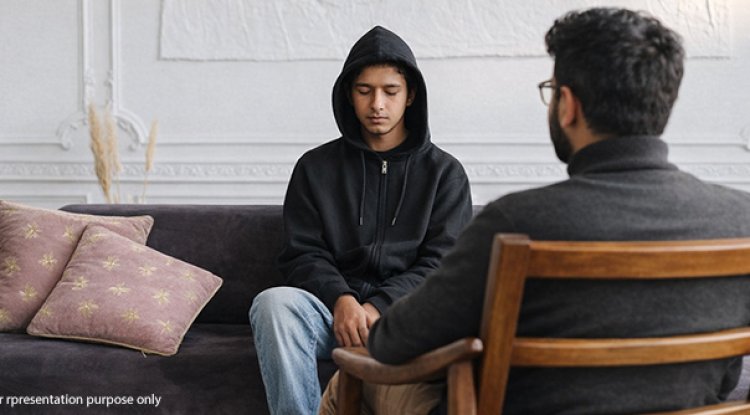
Vanessa and Datta had been married for two years. Their relationship was marked by constant fighting. Each argument left Datta emotionally drained, unable to sleep, and struggling to focus at work. He frequently woke up in the middle of the night, felt angry and guilty, and found it hard to function during the day.
It is difficult for men to articulate emotional needs, but in counseling sessions, many men like Datta have reported physical symptoms such as fatigue, drowsiness, insomnia, headaches, acidity, breathing difficulty, chest pain, back pain, loss of appetite, digestive issues, hair loss, and weight loss. Many said they went to great lengths to suppress their emotions through avoidance, withdrawal, or denial.
Some neglected their physical health, while others contemplated self-harm. What struck me most during counseling was how intensely they reacted during conflicts—and how quickly their actions escalated to harm both themselves and their spouses.
The impact on Vanessa was equally significant. “I couldn’t control my temper,” she shared. “I kept yelling and calling him names I would never use with my friends. I had constant rashes, colds, and a weak immune system. I felt like the living dead.”
Wives naturally desire a deep emotional connection with their husbands. When that connection fails, the consequences can be disastrous. One woman cut herself. Another poisoned her husband’s dog. One hit her husband with a cane. In one incident, a husband said, “If she cuts herself, she’s the one who bears the pain. It’s not my responsibility.” While such disconnection may seem like a way to avoid conflict, it often intensifies pathological patterns in the relationship. These patterns are tragically common in distressed marriages.
“Eventually,” Datta said, “I realized this wouldn’t work. I needed to communicate directly with Vanessa.” He sat down with her and said, “This is who I am. I understand that you’ve suffered, but I’ve suffered too. I can’t live like this anymore.” They hugged and cried together. Though their relationship remained fragile, they had taken an important step.
But soon, deeper conflicts resurfaced. The more Vanessa sought intimacy, the more Datta withdrew. For weeks, they hurt each other physically, even using belts. “Nothing was working. I was so insecure and skeptical about our relationship,” Vanessa admitted. After a particularly violent episode in which Datta struck her, she packed her belongings and left.
The Psychological Toll
Both husbands and wives in troubled marriages experience depression, low energy, and feelings of worthlessness. Women often report poor health, while men frequently say they lack supportive relationships. When help is not sought in time, self-esteem erodes and the cycle of violence continues.
Sometimes, both partners suppress their own needs in an attempt to keep peace. But in such an intimate relationship, this often leads to more conflict.
So why do otherwise normal individuals behave this way?
Marital expert William Glasser suggests that in abusive relationships, men often adopt destructive control tactics. Believing they "own" their wives, some men feel entitled to beat, abuse, or exploit their spouses. Glasser argues that because men in positions of power fear losing control, they allow such behaviors to continue unchecked. Indian wives, in turn, may repress their anger due to social conditioning and expectations.
Depression is often anger turned inward. This repressed anger reveals that both bonding and responding to intimacy in Indian marriages remain largely unfulfilled. The consequences of abuse can be devastating—neuroses, psychosomatic illness, madness, delinquency, and even violent crime. At the core lies an unhealed emotional wound, which, when repressed, festers until it erupts in damaging ways.
Emotional Abuse: The Silent Destroyer
It is often assumed that if you’re not being physically abused, then you’re not a victim. But that’s not necessarily true.
Emotional abuse can be just as harmful. It’s harder to recognize, often invisible, and far more insidious. It attacks a person’s identity and sense of self-worth and is often more psychologically damaging than physical violence. Many victims refer to it as “mind games.”
Emotional abuse typically involves one partner maintaining tight and unhealthy control, isolating the other from community and support systems. Abusers are skilled at self-deception and blame-shifting, continually making promises to change and declarations of love to keep their partners emotionally bound.
Healing and Hope
In the face of an abusive marriage, what do Indian couples need to survive meaningfully?
According to Dr. Vijay Nagaswami in The Hindu (August 7, 2011), two basic conditions must be met for marriage to thrive:
-
Bonding is not bondage. A true emotional bond is based on voluntary connection, not obligation or control.
-
It takes two to bond. While partners may express emotional needs differently, once they begin to engage meaningfully, they can resolve issues, deepen intimacy, and find mutual understanding.
Although some claim that therapy has no place in violent marriages, Dr. Jeffrey E. Young, Director of the Schema Therapy Institute, has shown that therapy can help individuals explore childhood trauma, emotional triggers, and maladaptive coping patterns. This self-awareness helps people change how they respond in relationships.
Vanessa and Datta stopped communicating for a few weeks. But once they calmed down, Vanessa called Datta. Both had taken time to reflect. Neither had given up on their marriage. They agreed to seek help and attended intensive counseling and workshops while living separately. These sessions helped them uncover deeper, unaddressed emotional wounds.
“I never realized that Datta was carrying so much trauma,” Vanessa said. “I always thought his anger was directed at me.” After months of counseling, they moved back in together. The road remains tough, but they are on a journey of healing. They now understand that their marriage commitment is worth the effort—and that healing is possible if both are willing to try.
A Sacred Commitment
The consequences of violent marriages—despite love—can range from emotional stagnation to dangerous estrangement. Some couples simply “hang in there,” while others drift into parallel lives. However, when couples treat marriage as a "solving circle" where the relationship itself takes priority over individual wants, transformation can begin.
In this model, each partner expresses what they are willing to do to support the marriage, rather than forcing the other to change. Still, when violence is rooted in early-life trauma, therapy is essential—addressing core emotional needs and shaping healthier relational patterns.
Victims must be protected. In some cases, they may need to relocate temporarily until the abusive partner receives treatment. If a counselor deems it safe for reconciliation, the couple can pursue healing together—always with continued counseling support.
God’s Design for Marriage
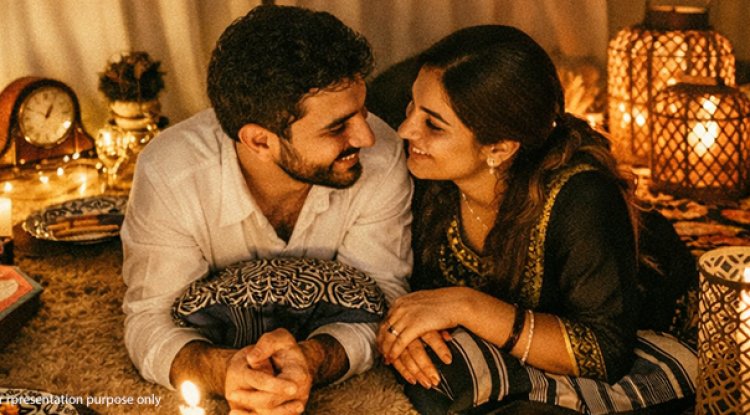
Both men and women are created in God’s image—equal in worth, distinct in role. In God’s design, a husband is called to love and honor his wife, treating her with understanding and never harshly. A wife is called to love, respect, and trust her husband.
Marriage is a school of growth—where we learn about unconditional love, forgiveness, humility, and mutual respect. It shapes our character and teaches us to lay down our selfish ambitions to serve our spouse. In this process, we discover true happiness—a reflection of God’s ultimate purpose for the sacred covenant of marriage.
Domestic violence and emotional abuse in India will sadly continue unless we intentionally choose to work on our relationships. Attending personal growth workshops, marriage enrichment seminars, parenting classes, and learning the skills of healthy bonding and intimacy are vital steps.
Only when disagreements are resolved within the solving circle will true intimacy develop—and the battle finally end.
All images used are for illustrative purposes only and have been sourced from Pexels.
What's Your Reaction?