Depression In Children
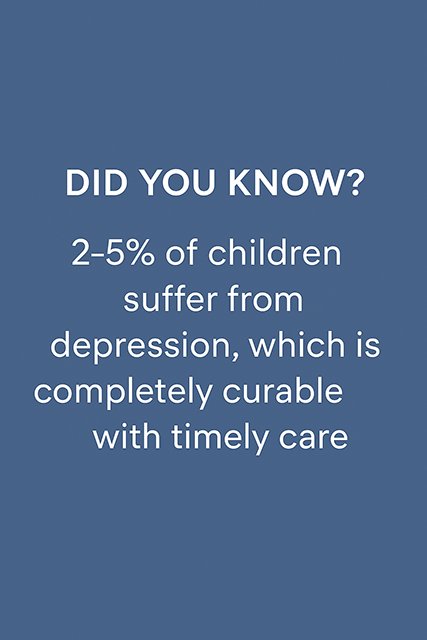
Childhood depression affects 2–5% of children but is completely curable with timely care. This article explores the major causes—including marital disharmony, learning challenges, and abuse—while offering practical steps for parents to support their children. It also highlights treatment options, especially psychotherapy, which has proven highly effective.

Yes, you read that right. Between 2–5% of children suffer from depression which, if left untreated, can lead to long-term struggles. The good news? Childhood depression has a 100% cure.
Until the 1980s, depression was thought to affect only adults. However, overwhelming research since then has shown otherwise. The American Academy of Child and Adolescent Psychiatry defines depression as an illness in which persistent feelings of sadness interfere with a child or adolescent’s ability to function.
In some cases, depression is internalized and eventually emerges as disruptive behavior or anger outbursts—often referred to as masked depression, which is particularly difficult to diagnose. Interestingly, among children below 10 years, boys are more likely than girls to experience depression.
In this article, we’ll explore:
-
The major causes of depression in children
-
Steps parents and caregivers can take to support and protect their children
-
Treatment options available
The best news is worth repeating: childhood depression is completely curable.
Why Does the Demon Rage?
a. Marital Disharmony
Parents, take note—our conflicts can deeply affect our children. When parents bicker, blame, or constantly fight, children may lock themselves into emotional prisons of guilt and self-condemnation. For them, depression becomes a life sentence.
b. Learning Disabilities and Different Learning Styles
In India’s current schooling system, children with learning challenges are often overlooked. Many are pressured from as early as age 2 to read and write, while teenagers are overwhelmed by exam stress. Such constant academic pressure can push children toward depression.
c. Sexual Abuse
Statistics show that 1 in 7 children experiences sexual abuse. These children often slip into deep depression, especially when parents fail to protect them or remain silent due to fear or embarrassment. Tragically, the abuser is often someone trusted, leaving the child isolated and frightened.
Parents, Take Action
a. Give Children a Bigger Picture for Their Lives
More than 70 years ago, Dr. Hans Selye, the world’s leading stress researcher, observed that children often drift without direction—a highly stressful situation. He suggested teaching the principle of altruistic egoism: finding purpose by being of service to others. Without this sense of meaning, children may turn to self-harm, substance abuse, or even suicide.
b. Teach Gratitude – An All-Time Cure for Low Moods
Dr. Tim LaHaye emphasized that gratitude is a safeguard against depression. Children taught to thank God, their parents, and others grow up with healthier outlooks. Parents must also address tendencies toward constant complaining early—before negativity becomes habitual.
c. Love and Unconditional Acceptance
Rejection by parents is one of the most devastating wounds a child can suffer. For example, a young girl was disowned by her mother simply because she had a darker complexion than her sibling.
Dr. Ross Campbell, author of How to Really Love Your Child, stresses the importance of eye contact, physical touch, and focused attention to communicate love. Most importantly, a strong, respectful marriage between parents gives children the deepest sense of security and acceptance.
Treatment Options for Childhood Depression
The most effective treatment for children is talk therapy (psychotherapy), which includes cognitive therapy, behavioral therapy, and grief work (as described by psychiatrist Dr. John White in The Masks of Melancholy). Talk therapy helps children confront negative thinking and distorted views of themselves and the world.
Dr. Paul O’Callaghan, working with sexually abused children in the Democratic Republic of Congo, successfully used psychotherapy techniques like drawing and storytelling to help children process trauma.
The use of antidepressants in children remains controversial. The U.S. Food and Drug Administration (FDA) warns of severe side effects, though in very severe cases they may still be prescribed.
Unfortunately, parents are often the last to recognize depression in their children. Misunderstanding or frustration can worsen the situation before help is sought.
Final Word
If you are a parent, be alert to the signs of depression in your child. With timely recognition, love, support, and proper treatment, childhood depression can be completely cured.
What's Your Reaction?