Interview: Is Adoption for me?
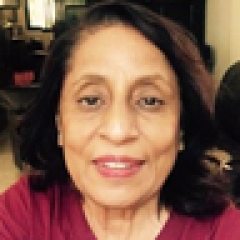
In this powerful interview, Dr. Aloma Lobo—paediatrician, adoption advocate, and former CARA Chairperson—shares personal and professional insights on adoption in India. She speaks on infertility, waiting parents, identity issues, and what it truly means to love a child by choice.
Dr. Aloma Lobo, a paediatrician by profession, and her husband David adopted their first daughter nearly 30 years ago. Already parents to three biological sons, they went on to adopt two more daughters.
Aloma’s passion for adoption advocacy led her to become an expert in the field. She served as the Chairperson of the Central Adoption Resource Authority (CARA) and later as Chairperson of the Adoption Coordinating Agency, Karnataka.
In this exclusive interview, Dr. Lobo shares both professional insight and heartfelt personal wisdom—from her experience as an adoptive mother and a policy expert.
1. What led you to get involved in the field of adoption?
My husband and I always wanted to adopt. When our third son turned four, we adopted our first daughter. At the time, very few people were adopting within India—most children were going abroad. Naturally, people were curious. They thought, “If they can do it, maybe we can too,” especially childless couples.
We started talking about it more and eventually became actively involved in the adoption space. I volunteered with several organizations before becoming Chairperson of the Adoption Coordinating Agency, and later, Chairperson of CARA with the Ministry of Women & Child Development.
However, more than policy-making, I prefer working directly with families and children. I’m especially passionate about placing children with special needs in loving homes.
2. How would you describe the adoption scenario in India today?
Over the years, the process has become more structured. There are more rules, checks, and balances. But despite Supreme Court-mandated time frames, delays still happen at every stage—especially before a child is placed with a family. These delays can hinder a child’s development.
Ironically, today there are more families waiting to adopt than children available for adoption. However, there are very few takers for older children or those with special needs.
3. What is the most pressing issue in the field of adoption?
Three major issues:
-
Time frames must be shortened.
-
More children need to be legally cleared for adoption. Many children in need of care and protection are not in the adoption pool.
-
A greater awareness of the inherent value of every child—whether healthy, abandoned, or with special needs—is still needed. Public attitudes have improved, but there’s more to be done.
4. How do you counsel couples considering adoption?
Most couples we see are dealing with infertility. Our first step is to ensure they have come to terms with it. If not, we refer them for additional counselling.
We ask couples to write an autobiography covering:
-
Why they want to adopt
-
Their relationship journey
-
Childhood experiences
-
Views on parenting
-
Infertility issues
This helps us—and them—gain insight. We conduct individual counselling at home and hold group seminars with other families. Some couples realize they aren’t ready, and that’s okay.
We also assess family dynamics. In nuclear families, the extended family needs to be informed. In joint families, acceptance is essential—the child must not enter a hostile environment.
We also use a questionnaire to understand attitudes (e.g., skin tone preference, religious background). The answers reveal whether a couple truly wants a child—or a ‘trophy’.
5. What would your advice be for those waiting months or years with no news?
This may sound cliché, but I believe there’s a child for everyone, somewhere. Your child will come to you. I know waiting can be hard, but when the time is right, it will happen. In the meantime, do everything needed to prepare.
6. Some people avoid adoption due to concerns about identity issues in adopted children. What would you say to them?
Identity issues can affect biological children too. Adopted children should always be told the truth—openly and honestly. Let them ask questions. Deal with it early and naturally.
Sadly, some educated parents think it’s better to keep it secret. Sometimes, others reveal it before the parents do. That’s deeply damaging. Children should be told when they are very young—ideally by age 10 or 11—so it becomes part of their normal story.
7. How much should adoptive parents share about their child’s history with others?
You are not obligated to share your child’s story with anyone. The child’s past is private. People may ask out of curiosity, but that doesn’t mean you owe them details.
When someone asks me why I adopted a special needs child, I ask them to give me one reason why I shouldn't—and I can give them 250 reasons why I should.
Your child is not an act of charity. Don’t let others devalue your child. Their story begins the day you brought them home.
8. Many couples wonder if they can love an adopted child as much as a biological one. What are your thoughts?
They need to remember: it was a biological mother who gave the child away. Biology doesn’t guarantee love.
Being a parent is not about biology—it’s about relationship.
Love is a relationship that grows, matures, and deepens over time. It is a decision, not just a feeling.
9. What advice do you have for adoptive parents?
If you treat adoption as equal to biology, your child and everyone around you will too. Be proud—but don’t feel the need to announce it to everyone.
You can’t change the world, but you can equip your child to face the world. Empower them with love, security, and confidence. Teach them they belong—fully and forever.
10. What has been the most rewarding part of being an adoptive parent?
When a little girl wraps her arms around you and says,
"Mama, I love you."
All images used are for illustrative purposes only and have been sourced from Pexels.
What's Your Reaction?